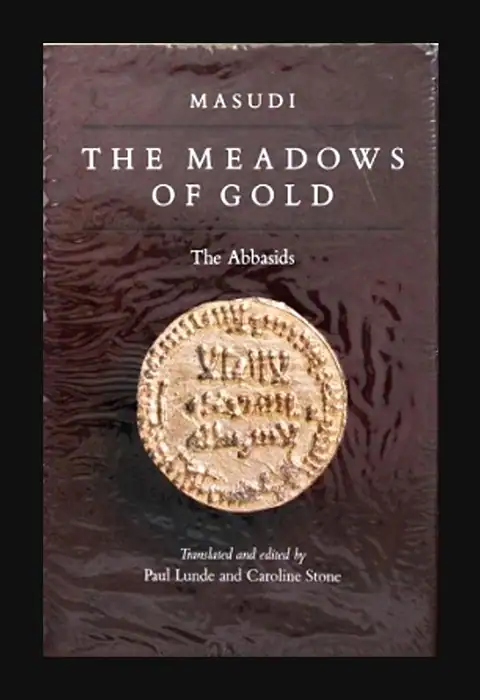
In the tenth century, the Islamic world was alive with knowledge. Baghdad’s libraries, Cairo’s markets, and the sea routes of the Indian Ocean created a web of ideas. Into this world stepped Abu al-Hasan Ali ibn al-Husayn al-Mas’udi, a traveller, historian, and thinker. His great work, Meadows of Gold and Mines of Gems, survives as a window into that age. Written between 941 and 948 CE, the book condensed vast information into an encyclopaedia of the known world.
|
Book information EL-MAS’UDI’S Alternate book download link: https://archive.org/…/his…/historicalencycl00masrich.pdf |
Who was al-Mas’udi?
Al-Mas’udi was born around 896 CE in Baghdad. He traced his ancestry back to a companion of the Prophet Muhammad. This gave him both prestige and responsibility in his intellectual life. But his fame did not come from his lineage. It came from his restless desire to travel and learn.
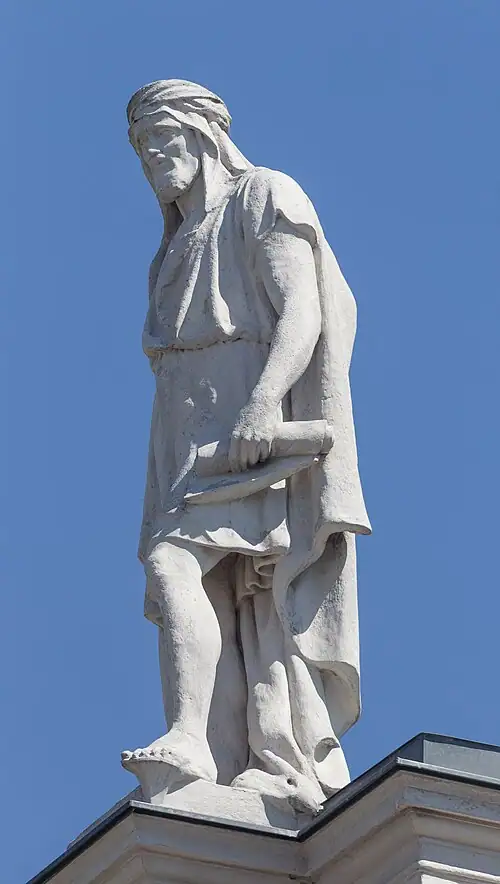
Unlike many scholars who stayed in courts or schools, al-Mas’udi moved constantly. He visited India, Persia, East Africa, and the Caspian Sea. He spoke with sailors, merchants, monks, and rulers. He recorded not only what he saw, but also what others told him. His writings mixed eyewitness accounts with collected stories, and in doing so he created something unique.
He died in Cairo around 956 CE. His legacy, however, spread far beyond his lifetime. Later historians, such as Ibn Khaldun, praised him as one of the first critical thinkers in the Islamic tradition.
What is in the book?
The Meadows of Gold is structured like a tapestry. It has 132 chapters. Each chapter deals with a theme: creation, geography, kings, prophets, or customs. Together, they form an encyclopaedia of both knowledge and imagination.
The book opens with a cosmological vision. Al-Mas’udi retells creation myths, blending Qur’anic teachings with folklore. He writes of the Earth resting upon a cosmic fish. He moves quickly to rivers, mountains, and seas. He describes the Nile and the Ganges with fascination, showing how water shaped civilisations.
History fills much of the work. He writes about the Assyrians, Persians, Greeks, and Byzantines. He traces the rise of Islam and the spread of Muslim rule into Spain, Africa, and beyond. He also tells stories of prophets, saints, and kings.
What makes the book rich is not just its breadth but its detail. Al-Mas’udi notes the trade of musk from Tibet, pearls from the Gulf, and spices from India. He writes about Hindu rituals in the Ganges, Chinese courts, and Slavic tribes. He even records customs such as monkeys being used as food-testers for kings, a curious practice shared by both Hindu and Chinese rulers.
His perspective and its limits
We must read al-Mas’udi in the context of his time. He was a Muslim scholar of the tenth century. His work reflects the intellectual world of Baghdad, not ours.
He often ranked faiths, with monotheism seen as higher and idol-worship described as strange. His ethnographic notes explained people’s appearance and behaviour through their environment, an early attempt at science, but one shaped by bias. He celebrated Muslim conquests as divinely guided, without asking much about those who were conquered.
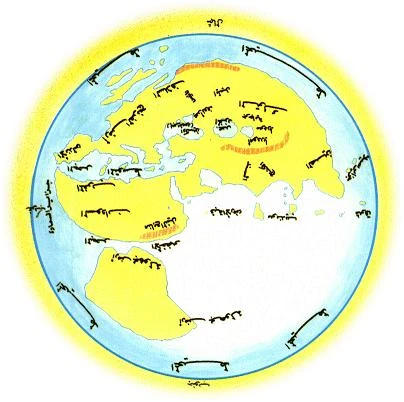
Yet he was not a narrow-minded man. He praised Chinese skill in governance and trade. He noted the conversion of the Khazars to Judaism with interest rather than hostility. He gave space to diverse traditions, and his curiosity made him more open than many later historians.
Stories like jewels
The book is full of anecdotes. They are like bright stones set in the larger fabric.
He tells of Adam descending onto a mountain in Ceylon, and how the scattered leaves from his clothing gave India its spices. He describes Ibrahim surviving the fire of Nimrod, an episode where flames across the world cooled in sympathy. He recounts the Russian fleet of 500 ships attacking the Caspian, showing the might of the northern raiders.
He tells of Chinese rebellions, Turkish armies, and Byzantine sieges. He records that the Nile’s source was still unknown, and that its annual flood baffled scholars. He notes that Hindus immersed ashes in the Ganges, believing it purified the soul.
These stories give life to the book. They remind us that history is not only dates and rulers. It is also belief, wonder, and imagination.
Why it matters today
In our age, we are overwhelmed by information. We live with endless data, books, and media. Al-Mas’udi’s work shows another model. He gathered knowledge widely but presented it carefully. He was selective. He offered not an archive but a crafted narrative.
Reading him reminds us that knowledge is always shaped by the collector. What he chose to include and how he framed it tells us as much about the tenth century as it does about ancient India or Byzantium.
It also shows the connections of the medieval world. Muslim merchants traded with China. Spices from India travelled to the Mediterranean. Ideas crossed seas as quickly as goods. Al-Mas’udi captured this interconnectedness. He saw the world not as isolated lands but as linked spaces.
For readers today, Meadows of Gold is both history and lesson. It tells us about the world as it was known more than a thousand years ago. And it shows how curiosity, travel, and openness can create bridges across cultures.
Conclusion
El-Mas’udi’s Meadows of Gold and Mines of Gems is more than a medieval encyclopaedia. It is a portrait of a mind reaching outward, trying to understand a vast world. It mixes myth and fact, reverence and curiosity. It reflects its time, with its biases and blind spots. Yet it also transcends its time, inviting us into a conversation across centuries.
In an age before printing, before modern science, before global maps, one man stitched together stories, observations, and beliefs into a coherent whole. His book remains a monument to the human urge to know.
For those who wish to read it, the English translation by Aloys Sprenger, published in 1841, is freely available. Download here or read via Archive.org.
To open its pages is to step into a medieval library, where seas, deserts, and skies meet in prose, and where history feels like a meadow of gold, filled with gems waiting to be discovered.
Courtesy: Rare Book Society of India