
In an era defined by rapidly evolving geopolitical tensions and technological advancements, air defense systems have become critical pillars of national security. These systems are designed to detect, track, and neutralize a wide array of aerial threats, including fighter jets, drones, cruise missiles, and ballistic missiles. As threats like hypersonic missiles and unmanned aerial vehicle (UAV) swarms become more sophisticated, nations are investing heavily in advanced air defense technologies to protect their airspace and critical infrastructure. This article explores the top 10 air defense systems in the world in 2025, highlighting their capabilities, ranges, and strategic significance in modern warfare. From Russia’s formidable S-400 Triumph to Israel’s innovative Iron Dome, these systems represent the pinnacle of air defense technology, integrating cutting-edge radar, missile interceptors, and artificial intelligence (AI) to ensure rapid and precise responses to aerial threats.
How the air defense system works
Air defense systems detect, track, and intercept airborne threats like missiles, drones, and aircraft. It uses advanced radars, sensors, and missile interceptors. These systems operate in layers — long-range radars identify threats, mid-range tracking system calculate their trajectory, and interceptors neutralize them in advance. Some, like the Iron Dome, specializes in short-range threats, while others, like the S-400, handle long-range targets.
By integrating with real-time data and AI, modern air defense ensures rapid response and precision in neutralizing aerial threats.
Trump’s Golden Dome plan proposes a $175 billion space-based missile shield using satellites and interceptors to protect the U.S., raising concerns about costs, technical feasibility, and a new space arms race.
List of the 10 Best Air Defense Systems In The World
The 10 best air defense systems in the world in 2025 are the S-400 Triumph, David’s Sling, S-300VM, Terminal High Altitude Area Defense (THAAD), MIM-104 Patriot, HQ-9 (Hong Qi 9), Aster 30 SAMP/T, Medium Extended Air Defense System (MEADS), Barak-8, and Iron Dome. Let’s take a deep dive into their capability details.
10. Iron Dome
Originating from Israel, the Iron Dome is a short-range ground-to-air defense system with an impressive range of up to 70 kilometers.
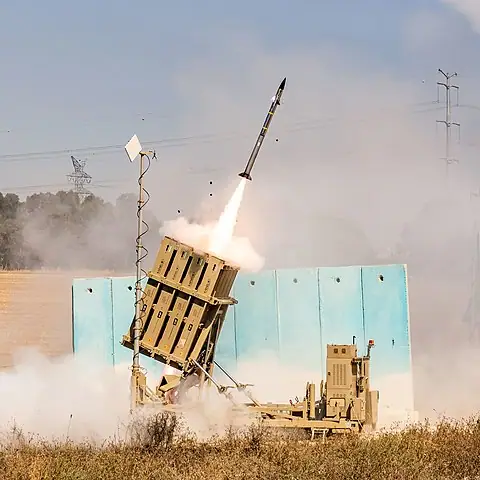
Developed jointly by Israel Aerospace Industries and Raphael Advanced Defense Systems, it features the Tamar interceptor and radar for tracking and destroying incoming missiles and airborne threats. Its compact design allows rapid redeployment, but its limited coverage area requires multiple batteries for larger regions. The system is a cost-effective solution for short-range defense, though its interceptors are expensive at $50,000–$100,000 each.
The Iron Dome boasts a remarkable success rate of over 90% in intercepting rockets. However, in recent times, Hezbollah’s attacks have overwhelmed Israel’s defenses, including the Iron Dome air defense system. As of now, Israel and the U.S. are the only confirmed users of Iron Dome.
In 2025, Israel is developing the Iron Beam, a laser-based system to complement the Iron Dome, promising lower interception costs.
Weakness
- Overwhelmed by Volume: A huge rocket barrage can overwhelm Iron Dome all at once.
- Cost Difference: The Tamir interceptors are expensive, but the rockets are cheap, which makes it hard to keep the economy going.
- Limited Range: Only works against threats that are close by (4 to 70 km), not ballistic missiles.
- Low-Flying Threats: It is hard to stop drones or cruise missiles that are flying below radar.
- Radar and command systems are vulnerable to cyberattacks or strikes on infrastructure.
9. Barak-8
The Barak-8 surface-to-air missile defense system, developed by Israel Aerospace Industries and DRDO of India, offers 360-degree defense against various airborne threats. It is a medium- to long-range surface-to-air missile system designed for both naval and land-based applications. With a range of up to 100 kilometers and an altitude capability of 16 kilometers, it counters aircraft, drones, cruise missiles, and tactical ballistic missiles. Its active radar homing and vertical launch system enhance its flexibility and accuracy. The Barak-8 is equipped with the LM 2048 radar for target detection and tracking. It can engage multiple targets simultaneously in all weather conditions.
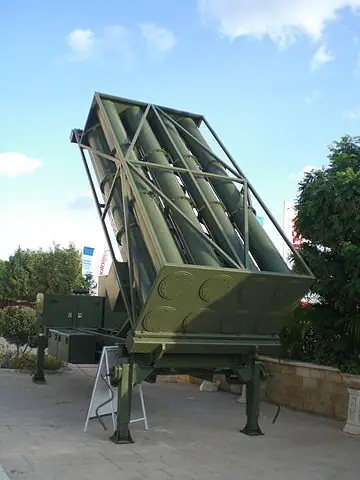
The Barak-8’s integration into India’s air defense network was showcased during “Operation Sindoor” in May 2025, where it successfully neutralized Pakistani drones and missiles ( read more on Indo-Pakistan drone war). Deployed on Indian naval ships and land-based systems, the Barak-8 offers multi-layered defense with rapid reaction times. Its primary limitation is its shorter range compared to systems like the S-400, but its cost-effectiveness and versatility make it a valuable asset.
Weakness
- High Cost: The $24 million price tag of Barak-8 makes it hard to use and keep in many places.
- Limited Ballistic Range: It has trouble with ballistic missiles that are more than 150 km away.
- Saturation Vulnerability: When a lot of missiles or drones attack at the same time, it can be overwhelmed.
- Weakness against Sea-Skimming: Not as good against sea-skimming missiles that fly low and fast.
- Infrastructure Reliance: Its radar systems are vulnerable to cyberattacks or electronic warfare.
8. Medium Extended Air Defense System (MEADS)
Developed by the United States, Germany, and Italy, MEADS is a ground mobile air and missile defense system designed to replace the Patriot missile system.
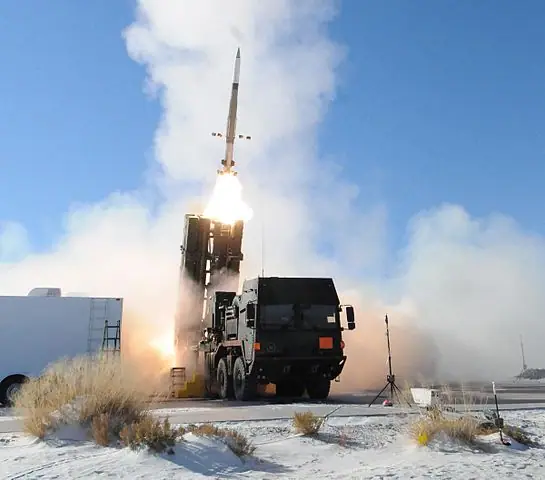
It is a network-centric air defense system designed to counter aircraft, cruise missiles, and tactical ballistic missiles. With a range of approximately 100 kilometers, MEADS uses the PAC-3 MSE missile for enhanced precision and mobility. Its 360-degree radar and open-architecture design allow seamless integration with other NATO systems.
MEADS’ plug-and-fight capability enables rapid deployment and interoperability, making it ideal for dynamic battlefields. While not as widely deployed as the Patriot, MEADS is gaining traction in Europe, particularly within NATO’s Integrated Air and Missile Defense framework. Its primary limitation is its developmental status, with full operational capability still scaling up in 2025. Nonetheless, its advanced technology and flexibility position it as a future leader in air defense.
7. Aster 30 SAMP/T
The Aster 30 SAMP/T, developed by the Eurosam consortium, is a mobile air defense system designed to protect critical infrastructure and deployed forces from aircraft, drones, and tactical ballistic missiles. With a range of up to 120 kilometers and an altitude capability of 20 kilometers, it can launch two missiles simultaneously, offering rapid response to high-speed threats. Its Arabel radar provides 360-degree coverage and precise tracking.

Used by France, Italy, and Singapore, the SAMP/T is highly effective in networked operations, integrating with NATO’s air defense architecture. Its ability to operate in standalone or coordinated modes enhances its flexibility. However, its range is shorter than systems like the S-400, and its high cost can limit widespread adoption. The system’s focus on medium- to long-range threats makes it a key component of European air defense.
6. HQ-9 (Hong Qi 9)
China’s HQ-9, developed by the China Aerospace Science and Industry Corporation, is a long-range surface-to-air missile system comparable to the Russian S-300. With a range of 125–200 kilometers and an altitude capability of 27 kilometers, the HQ-9 can intercept aircraft, helicopters, UAVs, and theater ballistic missiles. Its phased-array radar and mobile launchers provide robust detection and engagement capabilities.
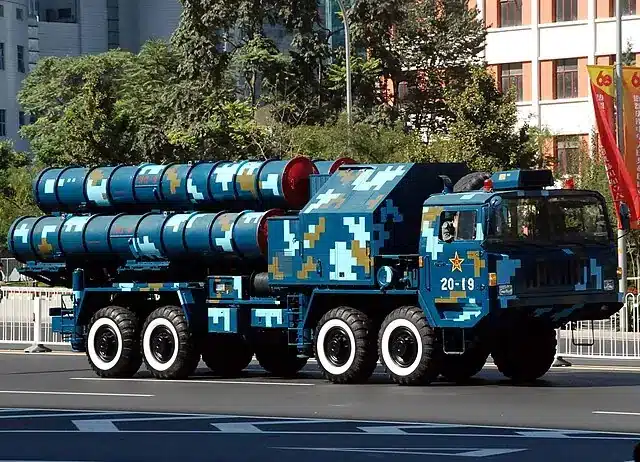
The HQ-9 has been deployed by China and Pakistan, with the latter using it in recent clashes with India. While less advanced than the S-400, the HQ-9’s cost-effectiveness and ability to operate in complex jamming environments make it a strong contender. Its primary drawback is its limited range and altitude compared to top-tier systems, but ongoing upgrades, such as the HQ-9B variant, are enhancing its capabilities.
5. MIM-104 Patriot
The MIM-104 Patriot, developed by Raytheon and Lockheed Martin, is one of the most widely deployed air defense systems globally, used by over 17 countries, including the US, Ukraine, and NATO allies. With a range of 160–170 kilometers and a maximum altitude of 24 kilometers, the Patriot is an all-weather, all-altitude system capable of neutralizing aircraft, cruise missiles, and tactical ballistic missiles. Its PAC-3 variant uses advanced hit-to-kill technology for enhanced precision against ballistic threats.
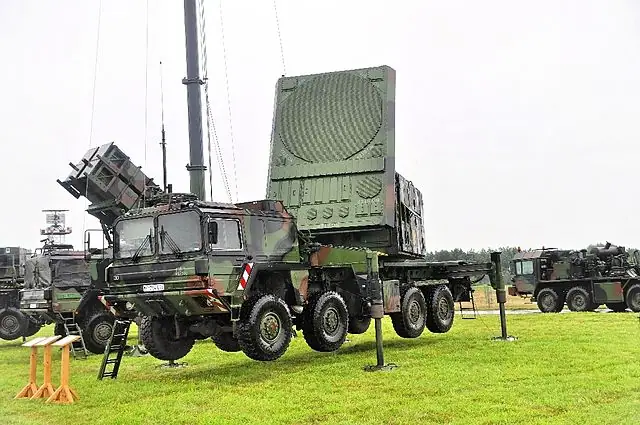
Combat-tested in conflicts like the Gulf War, Iraq War, and Ukraine conflict, the Patriot has proven its reliability, though its high cost per interceptor (approximately $4.1 million) is a notable drawback. The system’s phased-array radar and networked command structure allow it to engage multiple targets simultaneously. Recent upgrades have improved its ability to counter drones and hypersonic threats, ensuring its relevance in 2025. However, its effectiveness depends on integration with other systems for comprehensive layered defense.
4. Terminal High Altitude Area Defense (THAAD)
The Terminal High Altitude Area Defense (THAAD) system, developed by Lockheed Martin, is a key component of the United States’ ballistic missile defense architecture. Designed to intercept short-, medium-, and intermediate-range ballistic missiles during their terminal phase, THAAD uses hit-to-kill kinetic energy technology, eliminating the need for explosive warheads. With a range of approximately 200 kilometers and an interception altitude of up to 150 kilometers, THAAD excels in exo-atmospheric engagements, providing robust protection against missile threats.
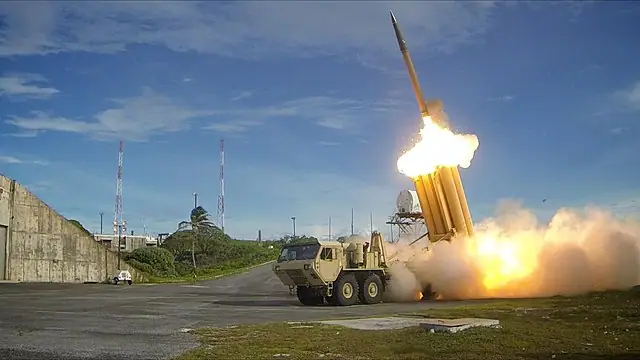
THAAD’s AN/TPY-2 radar offers long-range detection and precise tracking, enabling seamless integration with other US systems like Aegis and Patriot. Its combat effectiveness was demonstrated in 2017 when a THAAD unit in the UAE intercepted a Houthi missile, and more recently in 2024, when it neutralized a midrange ballistic missile in a Houthi attack. Deployed by the US, UAE, and South Korea, THAAD’s rapid deployment capability, as seen in exercises on Guam, underscores its strategic importance. However, its focus on ballistic missiles limits its versatility against low-altitude threats like drones
3. S-300VM
The S-300VM (Antey-2500), a long-range air and missile defense system developed by Russia, is designed to counter aircraft, cruise missiles, and short- to intermediate-range ballistic missiles. With a range of up to 250 kilometers and an altitude capability of 30 kilometers, the S-300VM can engage up to 24 aircraft or 16 ballistic targets simultaneously. Mounted on a tracked chassis, it offers excellent mobility and can be deployed in under five minutes, making it highly adaptable to dynamic battlefields.
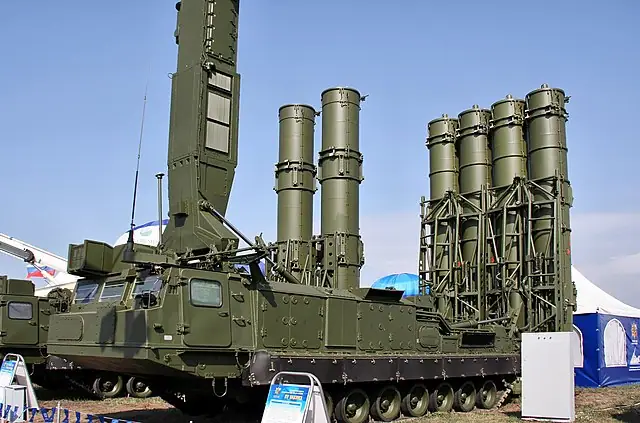
The system’s missiles, designed for maintenance-free operation for up to 10 years, travel at speeds exceeding Mach 7, providing swift responses to high-speed threats. While less advanced than the S-400, the S-300VM remains a formidable component of Russia’s air defense strategy and is deployed by nations like Egypt and Venezuela. Its primary limitation is its shorter range compared to newer systems like the S-400 or S-500.
Russia has provided S-300 system to Iran and that has significantly boosted Iran’s missile defense system .
2. David’s Sling
David’s Sling, co-developed by Raytheon and Israel’s Rafael Advanced Defense Systems, is a versatile defense system that includes medium to long-range anti-ballistic missiles and surface-to-air missile systems. Operational since 2017, it bridges the gap between Israel’s short-range Iron Dome and long-range Arrow systems, forming a critical layer in Israel’s multi-tiered air defense network. With a range of up to 300 kilometers and an altitude capability of 15 kilometers, David’s Sling is designed to intercept tactical ballistic missiles, cruise missiles, drones, and aircraft.
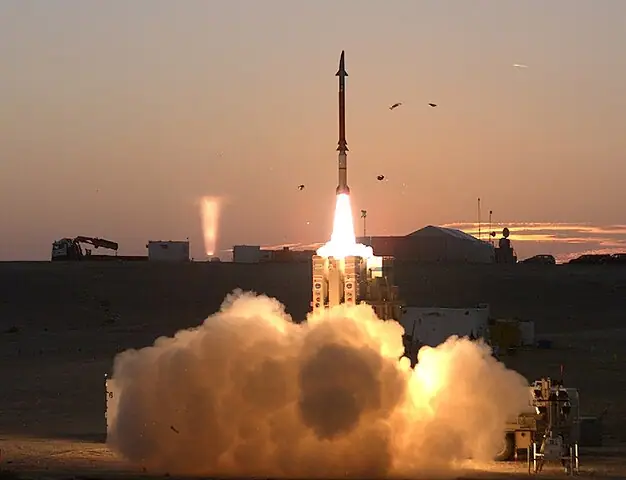
The system’s Stunner interceptor missile, equipped with dual electro-optical and radar seekers, achieves speeds of up to Mach 7.5, enabling rapid and precise engagements. Its ability to counter a wide range of threats makes it highly versatile. In 2023, David’s Sling gained international attention when Israel signed a landmark deal to export the system to Finland, highlighting its growing global demand. While highly effective, its reliance on expensive interceptors can be a limitation in prolonged conflicts.
1. S-400 Triumph, the most powerful air defence system
Topping our list is the S-400 Triumph, an air defense missile system developed by Russia’s Almaz Central Design Bureau.
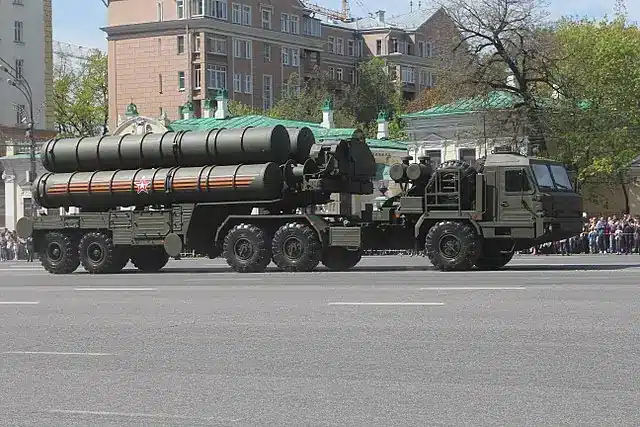
The S-400 integrates multiple functions, including radar, detection and targeting systems, anti-aircraft missile systems, and a command and control center. It can engage a wide range of threats, including aircraft and cruise missiles, and with a maximum height of 56 kilometers. S-400’s advanced radar system can defeat modern warplanes’ stealth technology.
Russia has reportedly begun delivering S-400 Triumph air defense equipment to Iran amid Tehran’s ongoing conflict with Israel. India’s air defense system has also incorporated S-400.
Russia deployed the S-400 system to protect its military bases in Syria, posing a potentially lethal threat to U.S. and Israeli military aircraft that occasionally operated in Syrian airspace.
The S-400 system deploys the 48N6E3 or 40N6E interceptor missiles for high-speed, high-altitude engagements like the ATACMS. On January 3, 2025, Russia shot down 8 US-made ATACMS fired from Ukranian territory.
Russia has developed a more advanced version of S-400 which is named S-500 Prometheus . It has a range of 600 km and better anti-ballistic missile capabilities.
Strategic Significance and Trends
The top 10 air defense systems in 2025 reflect the global shift toward multi-layered, integrated air defense architectures. Systems like the S-400 and THAAD excel in long-range, high-altitude engagements, while the Iron Dome and Barak-8 address short- to medium-range threats. The integration of AI, advanced radar, and hypersonic interceptors has enhanced response times and accuracy, enabling these systems to counter emerging threats like hypersonic missiles and drone swarms.
Geopolitically, these systems serve as both deterrents and strategic assets. Russia’s S-400 exports to India, China, and Turkey underscore its influence in the global arms market, while the US leverages THAAD and Patriot deployments to strengthen alliances in Asia and the Middle East. Israel’s Iron Dome and David’s Sling highlight the importance of tailored defense solutions for specific threats, such as rocket barrages. Meanwhile, collaborative efforts like MEADS and Aster 30 SAMP/T reflect NATO’s focus on interoperability and collective defense.
The air defense market is projected to grow from $46.55 billion in 2024 to $81.92 billion by 2035, driven by rising geopolitical tensions and technological advancements. The Asia-Pacific region, particularly India and China, leads in demand due to regional conflicts and defense modernization programs. For instance, India’s “Operation Sindoor” in May 2025 demonstrated the effectiveness of its layered defense, combining S-400, Barak-8, and Akash systems to counter Pakistani threats.
Summary Of “The 10 Best Air Defense Systems In The World [2025]”
The top 10 air defense systems in the world in 2025 are
- S-400 Triumph
- David’s Sling
- S-300VM
- Terminal High Altitude Area Defense (THAAD)
- MIM-104 Patriot
- HQ-9 (Hong Qi 9)
- Aster 30 SAMP/T
- Medium Extended Air Defense System (MEADS)
- Barak-8
- Iron Dome
These top 10 air defense systems in the world represent the cutting edge of innovation in the field of military defense. As threats continue to evolve, these system play a crucial role in ensuring the safety and security of nations. Their impressive capabilities are a testament to the ongoing efforts to protect against airborne threats in an increasingly complex global landscape.
FAQs
Q: Which country has the best air defence system?
A: The country with the best air defense system is Russia, with its formidable S-400 Triumph. Developed by Almaz Central Design Bureau, the S-400 integrates advanced capabilities such as radar, detection and targeting systems, anti-aircraft missile systems, and a command and control center. It boasts the ability to engage various threats, including aircraft and cruise missiles, with a remarkable maximum altitude of 56 kilometers.
Q: What are the top 5 air defence systems in the world?
A: The top 5 air defence systems in the world are the S-400 Triumph, David’s Sling, S-300VM, Terminal High Altitude Area Defense (THAAD), and MIM-104 Patriot.
Q: Which is the most powerful air defense system?
A: As of January 2025, the S-400 Triumph is the most powerful air defense system in the world.
Q: Why is the S-400 considered one of the best?
A: Here are the five reasons why the S-400 is considered one of the most powerful and advanced air defense systems in the world:
- Multi-layered Defense: It can engage various targets, including aircraft, drones, cruise missiles, and ballistic missiles.
- Long-Range Capability: It has a detection range of 600 km and an engagement range of 400 km (with the 40N6 missile).
- Multiple Missile Types: S-400 can fire missiles suited for short, medium, and long-range engagements.
- High Speed and Maneuverability: Its missiles travel at hypersonic speeds (Mach 14 for some variants).
- Advanced Radar and Tracking: S-400 can simultaneously track up to 300 targets.
Q: What is the most accurate air defense system?
A: The Russian S-400 Triumph is widely regarded as the most accurate and advanced air defense system in the world as of 2025. It integrates state-of-the-art radar, detection, and targeting systems. These technologies allow it to engage a wide range of threats-including stealth aircraft, cruise missiles, and ballistic missiles-at distances up to 400 km and altitudes up to 56 km. The S-400’s precision comes from its advanced multi-function radar and highly capable interceptor missiles, which enable it to neutralize even high-speed and maneuverable targets. Its proven versatility and effectiveness make it the benchmark for modern air defense.
Q: Can S-400 detect F35?
A: The S-400 air defense system can detect the F-35. But its ability to do so is limited by the F-35’s advanced stealth technology. For the F-35, detection is typically possible at much shorter distances-estimates suggest between 30 km and 97 km, depending on the radar type and conditions. However, detection does not guarantee a successful missile lock or engagement. The S-400 struggles to consistently track and target the F-35 due to its low radar cross-section and electronic warfare capabilities.
Q: Is S-400 better than Iron Dome?
A: The S-400 and Iron Dome serve different purposes, making direct comparison difficult. The S-400 is a long-range air defence system designed to intercept aircraft, ballistic missiles, and cruise missiles at high altitudes and long distances. In contrast, Israel’s Iron Dome is a short-range system focused on intercepting low-altitude rockets and artillery shells. While the S-400 offers broader strategic defence, the Iron Dome excels in urban protection against frequent, short-range attacks. Each is superior in its own operational context.
Q: Is S-400 better than Patriot?
A: The S-400 and the Patriot system are both advanced air defence systems, but each has different strengths.
The S-400 has a longer range (up to 400 km), can track more targets simultaneously, and engages a wider variety of threats, including stealth aircraft and ballistic missiles. It is generally considered more cost-effective.
The Patriot, especially its latest PAC-3 version, is proven in combat and excels at intercepting tactical ballistic missiles with high precision, though with shorter range and fewer simultaneous engagements.
Which is better depends on mission needs—S-400 offers broader coverage and versatility, while Patriot delivers battlefield-tested missile defence accuracy.






Ha, ha, ha! It’s like you guys haven’t watched the mediocre Russian system blow up one by one and the Patriots are intercepting one Kinzhal after another. This article makes me lose faith in your “teams” ability to assess reality.
It’s likely based on stats published by the country of manufacture, not necessarily battlefield performance. Still all are capable, but none are invincible.