China, officially the People’s Republic of China, is a global colossus with a legacy that spans millennia and a modern presence that shapes the world. Covering over 9.6 million square kilometers and home to more than 1.4 billion people, China’s influence permeates history, culture, economics, technology, and natural beauty. Its fame stems from ancient innovations, vibrant traditions, economic prowess, breathtaking landscapes, and a complex role in global affairs. This article explores the multifaceted reasons behind China’s prominence, delving into its historical contributions, cultural heritage, modern achievements, and enduring global impact.
A Civilization Steeped in History
China’s fame is anchored in its status as one of the world’s oldest continuous civilizations, with a history stretching over 5,000 years. From the Xia Dynasty (circa 2070–1600 BCE) to the modern era, China has been a cradle of human progress, contributing inventions, philosophies, and cultural milestones that have shaped the world.
The Four Great Inventions
China is renowned for its “Four Great Inventions”—paper, printing, the compass, and gunpowder—which revolutionized global society. Paper, invented by Cai Lun during the Han Dynasty (206 BCE–220 CE), transformed how knowledge was recorded, replacing cumbersome materials like bamboo and silk. This innovation spread along the Silk Road, reaching Europe by the 12th century and enabling the proliferation of literature and science.

Printing, another Chinese breakthrough, began with woodblock printing in the Tang Dynasty (618–907 CE) and evolved with Bi Sheng’s movable type in the Song Dynasty (960–1279 CE). These advancements democratized knowledge, paving the way for the printing revolution in Europe centuries later.
The compass, developed during the Han Dynasty, revolutionized navigation, enabling explorers like Zheng He to undertake vast maritime voyages in the 15th century. Gunpowder, invented in the 9th century, transformed warfare, spreading to the Middle East and Europe, where it fueled military advancements.
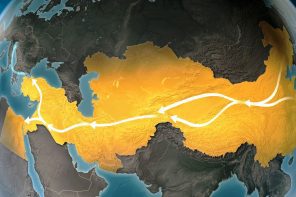
Beyond these, China pioneered silk production, which birthed the Silk Road, a network of trade routes connecting Asia to Europe. Other innovations, such as the abacus, porcelain (known globally as “china”), cast iron, and advanced agricultural techniques like row planting, underscore China’s ingenuity.
Iconic Historical Sites
China’s historical landmarks are among the most famous in the world. The Great Wall, initially constructed under Emperor Qin Shi Huang (221–206 BCE) and expanded during the Ming Dynasty (1368–1644), stretches over 21,000 kilometers. Built to protect against invasions, it symbolizes China’s resilience and engineering prowess. Today, it’s a UNESCO World Heritage Site and a global tourism icon, drawing millions annually.
The Terracotta Army in Xi’an, discovered in 1974, is another marvel. This collection of over 8,000 life-sized clay soldiers, horses, and chariots was buried with Emperor Qin Shi Huang to guard him in the afterlife. Each figure is unique, showcasing the artistry and ambition of the Qin Dynasty. The Forbidden City in Beijing, the imperial palace from 1420 to 1912, is a sprawling complex of nearly 1,000 buildings. As the political and ceremonial heart of the Ming and Qing dynasties, it represents China’s imperial grandeur and is now a museum housing priceless artifacts.
Other historical sites, like the Mogao Caves in Dunhuang, with their Buddhist art spanning a millennium, and the ancient city of Pingyao, with its preserved Ming-era architecture, further highlight China’s rich past.
Cultural Riches and Traditions
China’s cultural heritage is a vibrant tapestry of philosophy, art, literature, and traditions that have influenced not only Asia but the world.
Philosophy and Religion
China is the birthplace of Confucianism, Taoism, and significant contributions to Buddhism. Confucianism, founded by Confucius (551–479 BCE), emphasizes ethical behavior, family loyalty, and social harmony. Its principles have shaped Chinese governance, education, and interpersonal relationships for centuries, influencing neighboring cultures in Korea, Japan, and Vietnam.
Taoism, based on Laozi’s Tao Te Ching, advocates living in harmony with the Tao (the Way), emphasizing simplicity, balance, and humility. Its influence is seen in Chinese medicine, martial arts, and environmental thought. Buddhism, introduced from India around the 1st century CE, became deeply integrated into Chinese culture. Sites like the Shaolin Temple, known for its martial arts tradition, and the Leshan Giant Buddha, a 71-meter-tall statue carved into a cliff, reflect Buddhism’s enduring impact.
Art and Calligraphy
Chinese calligraphy is a revered art form, blending writing with visual aesthetics. Using brush, ink, and paper, calligraphers create works that are both literary and artistic masterpieces. Styles like seal script, clerical script, and cursive script showcase the diversity and depth of this tradition.
Traditional Chinese painting, often depicting landscapes, flowers, or birds, emphasizes harmony and minimalism. Artists like Fan Kuan (Song Dynasty) and Shen Zhou (Ming Dynasty) created works that capture the spiritual essence of nature. Modern Chinese art, blending traditional techniques with contemporary themes, continues to gain global acclaim, with artists like Ai Weiwei pushing boundaries.
Performing Arts
China’s performing arts, such as Peking Opera, are world-famous for their theatricality. Combining music, acrobatics, and elaborate costumes, Peking Opera tells stories of historical and mythical figures. The intricate makeup, with colors symbolizing character traits, and stylized movements make it a cultural gem. Other forms, like Kunqu opera and shadow puppetry, highlight China’s diverse theatrical heritage.
Festivals and Traditions
Chinese festivals are celebrated globally, with the Lunar New Year (Spring Festival) being the most prominent. Marked by dragon and lion dances, fireworks, and red envelopes (hongbao), it symbolizes renewal and family unity. The Mid-Autumn Festival, with its mooncakes and lantern displays, celebrates harvest and togetherness. The Dragon Boat Festival, featuring rice dumplings (zongzi) and boat races, honors the poet Qu Yuan and showcases China’s communal spirit.
Culinary Excellence
Chinese cuisine is a cornerstone of the country’s global fame, celebrated for its diversity, flavors, and cultural significance. With eight major regional cuisines—Sichuan, Cantonese, Shandong, Jiangsu, Zhejiang, Fujian, Hunan, and Anhui—China offers a culinary spectrum that caters to every palate.
Iconic Dishes and Regional Diversity
Sichuan cuisine, known for its bold, spicy flavors, includes dishes like mapo tofu, with its fiery chili and Sichuan peppercorns, and kung pao chicken, blending peanuts and spice. Cantonese cuisine, from Guangdong, emphasizes fresh ingredients and delicate flavors, with dim sum (small dishes like dumplings and buns) and roasted meats like char siu being global favorites. Shandong cuisine, with its emphasis on seafood and hearty flavors, and Jiangsu’s delicate, sweet dishes like braised pork belly, showcase China’s culinary range.Street food is equally iconic, with items like baozi (steamed buns), jianbing (savory pancakes), and lamb skewers reflecting China’s accessible food culture. Peking duck, with its crispy skin and tender meat served with pancakes and hoisin sauce, is a culinary ambassador, enjoyed in restaurants worldwide.
Tea Culture
China is the birthplace of tea, with a history dating back over 2,000 years. From green teas like Longjing to fermented pu’er, oolong, and black teas, China’s tea varieties are renowned for their quality and diversity. The Chinese tea ceremony, particularly in regions like Fujian, emphasizes mindfulness, respect, and the art of brewing. Tea houses remain social hubs, where people gather to relax and converse.
Economic and Technological Powerhouse
China’s transformation into a global economic and technological leader has cemented its modern fame. Since the economic reforms of the late 1970s under Deng Xiaoping, China has grown from an agrarian society to the world’s second-largest economy.
Economic Transformation
China’s economic rise is one of the most remarkable stories of the modern era. Cities like Shanghai, with its futuristic skyline, and Shenzhen, a tech hub that grew from a fishing village, symbolize this growth. China is the world’s largest exporter, producing everything from electronics to clothing. Its Belt and Road Initiative, launched in 2013, aims to connect Asia, Europe, and Africa through infrastructure and trade, reinforcing China’s global influence.
Companies like Alibaba, Tencent, and ByteDance (creator of TikTok) dominate e-commerce, gaming, and social media. Alibaba’s Singles’ Day, held annually on November 11, is the world’s largest online shopping event, generating billions in sales. China’s manufacturing prowess, often called the “world’s factory,” supports global supply chains.
Technological Innovation
China leads in fields like artificial intelligence, 5G telecommunications, and high-speed rail. Its high-speed rail network, spanning over 40,000 kilometers, is the largest in the world, connecting cities like Beijing and Shanghai in under five hours. Companies like Huawei and ZTE drive global 5G development, while innovations in renewable energy—China is the world’s largest producer of solar and wind power—position it as a leader in combating climate change.
China’s space program is another source of pride. The Chang’e missions have explored the moon, including a historic landing on its far side in 2019. The Tianwen-1 mission landed a rover on Mars in 2021, and the Touard space station is a step toward long-term human space exploration.
Natural Wonders and Scenic Beauty
China’s diverse geography, from Himalayan peaks to tropical rainforests, adds to its fame. With 56 UNESCO World Heritage Sites, many are natural wonders that captivate visitors.
Iconic Landscapes
The karst mountains of Yangshuo, with their jagged peaks and misty rivers, are among China’s most picturesque landscapes. The Li River, winding through these peaks, is a favorite for cruises and photography. Zhangjiajie National Forest Park, with its towering sandstone pillars, inspired the floating mountains in Avatar. The park’s glass-bottomed bridge, one of the world’s longest, adds a modern thrill.
The Yellow River and Yangtze River, two of the world’s longest, have shaped China’s agriculture and culture. The Three Gorges Dam on the Yangtze, completed in 2012, is the world’s largest hydroelectric dam, showcasing China’s engineering ambition. The Gobi Desert, the Tibetan Plateau, and the tropical island of Hainan further highlight China’s geographic diversity.
Biodiversity
China is one of the world’s most biodiverse countries, home to over 30,000 plant species and 2,800 animal species. The giant panda, native to Sichuan and Shaanxi, is a global conservation icon. China’s panda diplomacy, loaning pandas to zoos worldwide, fosters goodwill. Other unique species, like the Yangtze finless porpoise and the red-crowned crane, underscore China’s ecological richness.
Global Cultural Influence
China’s cultural exports have made it a global phenomenon. Martial arts, popularized by Bruce Lee, Jackie Chan, and films like Crouching Tiger, Hidden Dragon, have inspired practitioners worldwide. Chinese cinema, from Zhang Yimou’s visually stunning epics to Jia Zhangke’s introspective dramas, has earned international acclaim.
Chinese literature, from classics like Journey to the West, Romance of the Three Kingdoms, and Dream of the Red Chamber to modern works by Nobel laureate Mo Yan, resonates globally. Chinatowns in cities like New York, London, and Sydney, along with global Lunar New Year celebrations, reflect China’s cultural reach.
Challenges and Controversies
China’s fame is not without complexity. Its rapid industrialization has caused environmental challenges, including air pollution and deforestation, though recent green initiatives show progress. Human rights issues, such as restrictions on freedom of speech and policies in Xinjiang and Hong Kong, have sparked global debate. Yet, China’s achievement in lifting over 800 million people out of poverty since the 1980s is a historic feat.
China’s Role in the FutureChina’s influence is set to grow. Its investments in Africa, Latin America, and Southeast Asia through the Belt and Road Initiative expand its global footprint. Chinese universities like Tsinghua and Peking are now world-class, attracting international students. Innovations in AI, quantum computing, and biotechnology position China at the forefront of the fourth industrial revolution.
China’s soft power, through cultural exports like cuisine, film, and education (e.g., Confucius Institutes), continues to expand. As it balances tradition with modernity, China’s global role will remain dynamic and influential.ConclusionChina’s fame is a mosaic of ancient ingenuity, cultural depth, economic might, and natural splendor. From the Great Wall to the skyscrapers of Shanghai, from Confucian wisdom to AI breakthroughs, China’s contributions are vast and enduring. As it navigates global challenges and opportunities, China remains a nation that captivates, inspires, and shapes the world’s future.